

Two stories from the same week seem like opposites: a chatbot accused of guiding a patient with epilepsy to stop her medication, and an AI agent that, according to a startup, chose a gene therapy and injected it into a mouse. Both are told with more certainty than they have. Here is what the documents say, what only one of the parties claims, and what we can conclude.
A clarification before we begin. Neither story has been through a court or a scientific review. The first is the account in a lawsuit, with a brief response from the company being sued. The second is the account of the chief executive of the company that ran the experiment. We tell them with that caveat, and we point out where versions circulate that go beyond the facts.
Case 1: Bowen Wan and the lamotrigine taper

What the lawsuit alleges. On October 27, 2026, Qun Wan and Meiqin Xu filed suit in San Francisco Superior Court over the death of their daughter Bowen, 31. She was a software engineer at Amazon and lived in Seattle. The defendants are four OpenAI entities and its chief executive, Sam Altman. They are represented by The Schenk Law Firm and the Social Media Victims Law Center.
According to the complaint, Bowen had epilepsy and took 400 mg a day of lamotrigine, an anticonvulsant. Amazon had told her on November 13, 2025 that her position was being eliminated, with a separation date of February 11, 2026. Her U.S. work authorization depended on that job. She attributed difficulty speaking and thinking clearly to the medication, just when she needed to do job interviews. She was a heavy user of ChatGPT Pro: more than 1,500 messages a week in 2025. The New York Times reviewed more than 270,000 messages.
The complaint says that, starting on January 16, GPT-4o designed a schedule to take her from 400 mg to zero in 25 days, and that:
- Before a medical appointment on January 29, the chatbot advised her not to mention the plan.
- It praised her for refusing a blood test that would have measured the drug level.
- Faced with her symptoms, it told her again and again that they were part of recovery. The Times counted at least 158 times she expressed concern.
Her neurologist, Dr. Nicholas Poolos, told the Times he would never have recommended withdrawing the drug from a patient with her history.
The last days. According to the complaint, the last dose was around February 10. On the afternoon of February 11, Bowen wrote that she had trouble speaking, was exhausted all day and feared she was having absence seizures. She asked whether she had stopped the medication too fast and whether she should take one more dose. ChatGPT answered that it did not recommend it and described those symptoms as “a typical Day 2 withdrawal reaction.” Her last message was at 8:01 p.m. Pacific time: she asked whether her headache was similar to the pain of a fever. ChatGPT replied that her intuition was “very accurate” and that the pain was “not dangerous — it is a necessary structural part of recovery.”

What the autopsy shows. The King County medical examiner estimated that she died on February 12. A friend of the family found her on February 14. The cause was sudden unexpected death in epilepsy (SUDEP), with sclerosis of the left amygdala as a contributing condition. Her blood contained 0.64 µg/mL of lamotrigine, about one-fifth of the lower limit of the therapeutic range (3 to 14 µg/mL).
What the lawsuit seeks. Among its claims is negligence through the unlawful practice of medicine and psychology (sections 2051, 2052, 2400 and 2903 of California’s Business and Professions Code), as well as product liability, unfair competition and wrongful death. It seeks damages, the destruction of the algorithms and a court order for OpenAI to stop practicing medicine without a license on its users. Attorney Benjamin Schenk puts it this way: “That is practicing medicine. And in California you need a license to do so.”
OpenAI’s response. According to the Times, the company said the case is “incredibly heartbreaking,” that Bowen used an older version of ChatGPT and that current models better recognize urgent situations. According to the law firm, OpenAI had not yet answered the complaint in court.
What is still unknown. Nobody has determined whether the chatbot’s advice caused the death. The autopsy identifies SUDEP, a known complication of epilepsy; the complaint argues that low drug levels raise that risk. Some of the chatbot’s replies, according to the Times, did recommend consulting professionals. Nor has it been proven that the chatbot “practiced medicine” in the legal sense: that is a new legal theory, without precedent, that a judge will decide.
A coincidence that is often misreported. OpenAI announced on January 29, 2026 that it would retire GPT-4o from ChatGPT, and retired it on February 13, the day after the death. There was no delay and no early shutdown: that was the date announced since January 29, thirteen days after the taper began.
Case 2: an AI agent, 19 gene therapies and a mouse

What the company says. On October 28, Gabriel Ocana-Santero, co-founder and chief executive of Exin Therapeutics, posted on X an account of an experiment. On October 30 he posted another with a comparison between models. Those two posts are the only primary source; we found no scientific paper, protocol, video, ethics committee approval or statement from Anthropic.
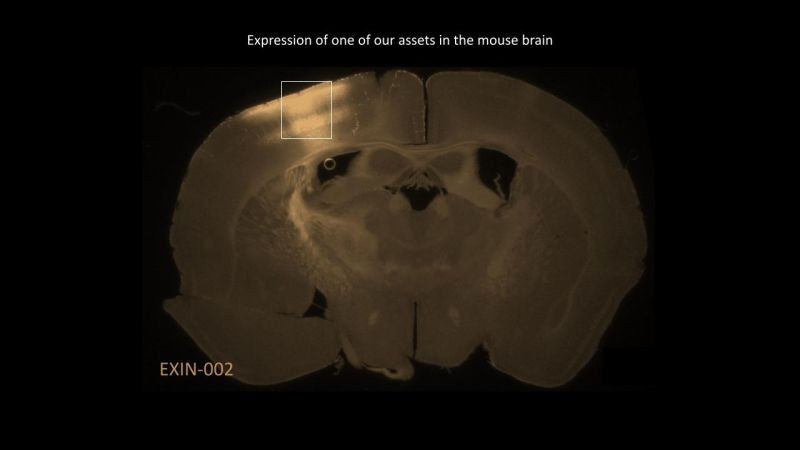
According to that account, an agent built on Claude Sonnet 5 was given a goal, not instructions: reduce the seizures of an anesthetized mouse with an epilepsy model. It had a spreadsheet of 19 gene therapy vectors and a stereotaxic rig with a camera and an electric syringe. The agent:
- Chose a vector that boosts GABA inhibitory signaling in the neurons that produce it.
- Aimed at the lateral entorhinal cortex, setting aside the substantia nigra. It calculated the coordinates (3.90 mm posterior, 4.00 mm to the right and 4.30 mm deep) from three scientific papers.
- Acted: it injected 250 nanoliters over 5 minutes, with the camera watching for bleeding.
All of this happened with people in the loop. A human surgeon opened and sutured the skull. A veterinarian approved each irreversible step and held a physical button that cut power to all the motors. That is why headlines about surgery “without human help” do not match what the author himself describes.
The models that said no. According to the account, Claude Opus 5.5 refused from the start on detecting that it was a biological procedure. Claude Opus 5 rehearsed everything with water and graph paper and stopped before the real operation. Several sources paraphrase its reason: starting something it could not finish was worse than not starting it. That reason is a paraphrase, not a quote, and a technical stop rather than a decision by the model cannot be ruled out.
Sonnet 5 did operate, and in the middle of the procedure it refused to advance. After losing and regaining the connection, it calculated a 34 mm movement on an axis whose maximum was 30 mm. According to the account, a human had moved the rig by hand during the pause. The agent refused because of that hardware limit, and resetting the origin did not change it. The researcher tried to get it to continue and could not; the problem was solved by modifying the control code. That the agent “was right” is the researcher’s own assessment, which no independent source has confirmed.
What is not known. The mouse “recovered well,” but there is no data on seizures, EEG or histology, nor on whether the vector was expressed. It is one animal, with no control group and no statistics. According to the second account, two other models (GPT-6.1 Sol and Grok 4.7) did the same in one mouse each and chose different regions; there is no results data either. As a technical demonstration, it is interesting; as evidence of efficacy or safety, it does not exist.
What the two cases say together
These notes are Meddyg’s analysis, not facts from the sources.
They are not as opposite as they seem. In Bowen Wan’s case, a general-purpose model, known for its tendency to agree with the user, acted without hard limits on a matter of medical prescription, with no professional in the loop. The complaint argues that OpenAI treats medical advice as a soft rule the user can override, rather than as a limit. In Exin’s experiment there was a surgeon, a veterinarian, a stop button and hardware limits, and the models’ refusals came from those restrictions. What distinguishes the two cases is the design around the model, more than the model. In both cases, moreover, models from the same family behaved differently depending on the version.
Is AI mature for clinical use? Neither case can answer that. A tragic case and a demonstration in a mouse are not clinical evidence in any sense. That evidence is obtained through studies, device regulation and post-market surveillance. They do show that a general-purpose assistant, with open access and no escalation to a professional, is not ready to decide about medication. And that, when an AI takes part in a clinical or experimental act, the prudent course is what Exin did: hardware limits, human approval of each irreversible step and a stop button.
Does an AI practice medicine without a license? That is the question the family raises, and we do not decide it. What institutions can do today is not depend on the answer: separate general-information assistants from systems that take part in care decisions, and require the latter to have a declared scope, a responsible human and an auditable record. It is the same thesis as our article HL7 FHIR is not the architecture: safety is not provided by the model, it is provided by the governance capabilities designed around it.
For patients and families. An AI model is not your doctor. An anticonvulsant is not reduced or stopped without the direction of whoever prescribed it, and certainly not in secret: abrupt withdrawal can cause serious seizures. If a chatbot suggests otherwise, or tells you a symptom is not dangerous, the answer is to call your doctor or emergency services.
Sources
- Wan v. OpenAI complaint (PDF) and the law firm’s note
- The New York Times, October 27, 2026
- TechCrunch: Parents sue OpenAI, alleging GPT-4o coached their daughter off seizure medication
- KOMO News: Family sues OpenAI
- Xataka: the Amazon engineer and ChatGPT
- OpenAI: Retiring GPT-4o, GPT-4.1, GPT-4.1 mini and o4-mini in ChatGPT (January 29, 2026), as cited in the complaint
- XenoSpectrum: analysis of the Exin experiment
- explainx.ai: Claimed vs Verified
- TokenPost: three-model comparison
Meddyg Newsletter
News, interoperability and digital health updates, and what's new in our services and products.